
Sand Reckoner - the personal blog of Simon Fabri
About this site
Welcome to my blog site. I am a technology and product leader, with experience working across many industries, including mobile comms, energy, automotive and big tech (with Amazon). I am currently the Product & Engineering Director at HMGCC’s the UK’s centre for National Security Engineering.
I have a passion for exploring complexity, and understanding how to navigate through ambiguity and chaos. In this Substack, I explore themes relating to emerging technology and what it takes to make great tech products. I try to look beyond the headlines, trying to distinguish between what really matters, and what emerging technology is really disruptive from what is simply hype. Over the past ten years, I have written about the Internet of Things, the advent of Big Data, machine learning, the future of mobility, crypto technologies and Web 3.0, and latterly (quite unsurprisingly) quite a bit on AI.
I also reflect on my learnings in leading engineering and product teams, writing on various topics relating to technology leadership. Many of these reflections are either directly based on my experience or are my way of thinking about challenges I am dealing with in my day job. The common thread throughout this blog remains how to make sense of and harness technological change.
In these writings, I will sometimes get things wrong, especially when I am trying to figure out what happens next. However, here you’ll hopefully find different perspectives on things, and not simply recycling stuff found elsewhere. I use AI tools to assist my research, to proofread the text and to generate images, but the ideas, concepts and writing are my own. Nothing I write here should be interpreted as being reflective of current or past employers’ viewpoints.
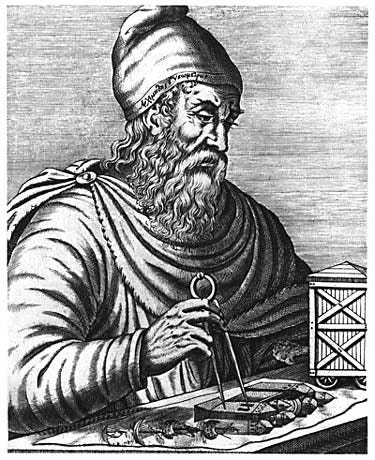
Why “The Sand Reckoner?”
The number of grains of sand on a beach is a frequently used shorthand for infinitely large number. Famously, Carl Sagan said that there are more stars in our Universe than there are grains of sand in all the beaches on Earth.
However, Sagan was by no means the first to think about the enormity of the universe. Over 2,200 years ago, the ancient Greek polymath Archimedes, philosopher, mathematician, and astronomer was fed up of people resorting to infinity as a cop-out to dealing with large, but otherwise finite numbers. He therefore invented a new counting system. In an essay called “The Sand Reckoner,” he proposed a system to address the problem. This was based on powers of 10, which was capable of describing unimaginably large numbers, including the number of grains of sand that could be fit in the entire universe – (He estimated this to be 8×1063). This, remember, was at a time when Europe was using number systems similar to the Roman number system, which were wholly ill-suited for efficient maths.
This is the only dip into ancient Greek mathematics to be found in this blog. The rest of the site originally started as a review of all things to do with the Internet of Things. It has since digressed into technical, leadership, product and strategy topics relating to creating tech products. This encompasses machine learning, cloud platforms, agile, lean, devops and so on. Over the past few years, unsurprisingly, I have dedicated much attention to trying to make sense of the AI revolution. Over the past five years since I have been writing this, topics have ranged from the defeat of the Romans at Carrhae to the adoption of DevOps to deploy Machine Learning pipelines.
Why subscribe?
Subscribe to get full access to the newsletter and publication archives.
Stay up-to-date
Never miss an update—every new post is sent directly to your email inbox. For a spam-free, ad-free reading experience, plus audio and community features, get the Substack app.
Join the crew
Be part of a community of people who share your interests. Participate in the comments section, or support this work with a subscription.
To learn more about the tech platform that powers this publication, visit Substack.com.
